
There is a conversation that happens in millions of Indian homes every day — a woman in her late thirties or forties is snapping at her children, forgetting things she just said, gaining weight despite not changing her diet, and lying awake at 2am with her mind racing. The family around her is frustrated. She is frustrated with herself. And somewhere in the middle of it all, nobody has told her that what she is going through has a name, a cause, and a solution.
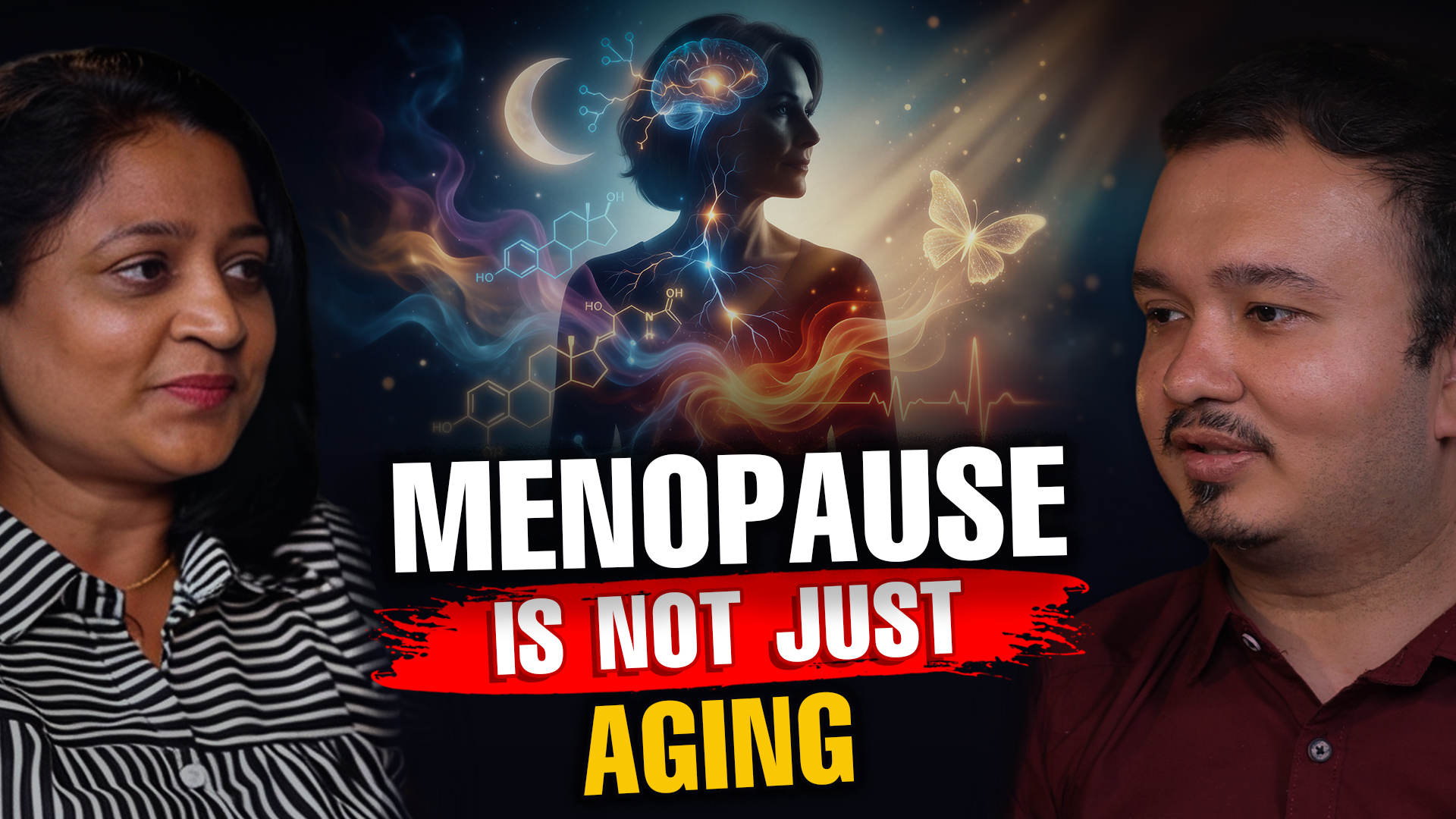
On this episode of The HJ Show, host Harsh Joshi sits down with Chaitali Khamar — Women’s Hormones Coach, Dietitian, PCOS and Menopause Specialist, JoshTalks speaker, and author of two books including Five Pillars of Happy Menopause — for one of the most practically useful conversations the show has hosted.
What Is Actually Happening After 35?
Chaitali opens with a truth most women have never been told clearly: after the late thirties, the body begins what she calls hormonal chaos. The primary driver is the gradual decline of estrogen — the hormone produced in the ovaries that, until now, has been quietly managing everything from mood and metabolism to memory and sleep. As estrogen begins to drop, the effects ripple through every system in the body.
Physically, women notice sudden belly fat and thigh fat that was not there before, even when nothing has changed in their diet. Hair starts thinning. Skin becomes dull. Pigmentation appears. Hot flashes arrive without warning — a sudden, intense wave of heat from within, particularly around the neck area. Sleep becomes restless, with eyes opening repeatedly through the night.
Mentally, something that Chaitali calls brain fog sets in. A woman walks from the kitchen to the fridge and cannot remember why she went. She forgets her children’s names for a moment mid-sentence. She misplaces things she carefully put away. This is not early dementia — it is estrogen decline directly affecting the brain’s ability to send timely commands to the body.
Emotionally, the picture becomes even more nuanced. Low confidence. A growing fear of being judged. An avoidance of social situations because someone might comment on the weight gain. A creeping loneliness — a sense that nobody in the house truly understands what is happening inside her body.
The Three Stages of Menopause
Chaitali breaks menopause into three stages that most women conflate into one. Perimenopause is the transitional phase — which can begin as early as the mid-thirties — where periods become irregular, skipping months and then returning unpredictably. This is where most of the early symptoms appear. Menopause itself is defined as twelve consecutive months without a period. And post-menopause is everything that follows — a stage where, if nothing has been addressed, symptoms can become significantly more serious, including diabetes, thyroid disorders, heart problems, and osteoporosis.
The key insight Chaitali offers here is that osteoporosis — weakening of the bones — is almost universal in women after forty if calcium intake has been neglected. She sees this play out in her consultations constantly: women who can fracture a bone from a small misstep, because bone density has been quietly declining for years while the focus remained elsewhere.
PCOS and PCOD — A Young Woman’s Crisis
The conversation then moves to PCOS and PCOD — conditions that are no longer confined to women in their thirties. Out of every ten young women today, Chaitali estimates that five are dealing with some form of this hormonal imbalance. The drivers are identifiable and modern: late night phone scrolling, junk food dependency, irregular sleep, digital addiction, and the absence of the structured environment that living with parents used to provide.
PCOD and PCOS manifest as irregular periods, acne on the face and back, visible facial hair growth, hair thinning, belly fat accumulation, and fertility challenges when the time comes to conceive. The tragedy, Chaitali notes, is that most young women dismiss these signs or manage them with medication alone — without ever addressing the lifestyle root cause.
Why Your Friend’s Diet Won’t Work for You
One of the most practically valuable parts of the conversation is Chaitali’s dismantling of the copy-paste diet culture. AI tools, WhatsApp forwards, social media reels — none of these understand your genetics, your food culture, your environment, or your specific hormonal profile. A diet that worked for your colleague will not automatically work for you. Two sisters with identical genes can have completely different bodies that respond to food in entirely different ways.
Her philosophy is simple: eat what your grandmother ate, in the right quantities, at the right times. A Gujarati woman does not need to abandon dal, roti, and rice in favour of avocado and blueberry smoothies. She needs to eat her staple food intelligently — with better portion control, more variety through local fruits and millets, and consistency over time.
Menopause, Marriage, and the 40-60% Statistic
Perhaps the most striking moment in the conversation is when Chaitali reveals that between forty and sixty percent of divorces in this age group are connected — directly or indirectly — to the hormonal chaos of menopause. The chidchidapan, the withdrawal, the low libido, the weight changes, the emotional volatility — when a husband does not understand what his wife is going through and instead criticises or distances himself, the relationship begins to fracture. What makes it even more complex is that men go through their own version of this — andropause — at roughly the same time. Two people dealing with hormonal upheaval simultaneously, with no framework for understanding it, is a recipe for disconnection.
Chaitali notes with warmth that some of her most touching consultation inquiries come from husbands — DMing her on Instagram on behalf of their wives, asking how to help.
Fit, Fine and Fabulous — The Three-Part Formula
The episode closes with Chaitali’s signature framework: Fit, Fine, and Fabulous. Fit means a balanced, culturally appropriate diet — not less food, but the right food at the right time. Fine means mental health — managing anxiety, building a support system, and not carrying the entire weight of a household alone. Fabulous means self-care, grooming, and confidence — not to look like a model, but to feel graceful at every age.
She leaves with a free eBook for listeners on how to balance hormones through diet and lifestyle modification — a practical starting point for anyone ready to stop ignoring the signals their body has been sending.
Watch the full episode of The HJ Show with Chaitali Khamar on YouTube, or listen on Spotify and Amazon Music.

