
There is a quiet health crisis unfolding across India — not from a new virus or an unknown disease, but from something as ordinary as taking the wrong antibiotic at the wrong time. Or stopping a course of medicine three days early because you felt better. Or Googling your symptoms and ordering tablets from an app.
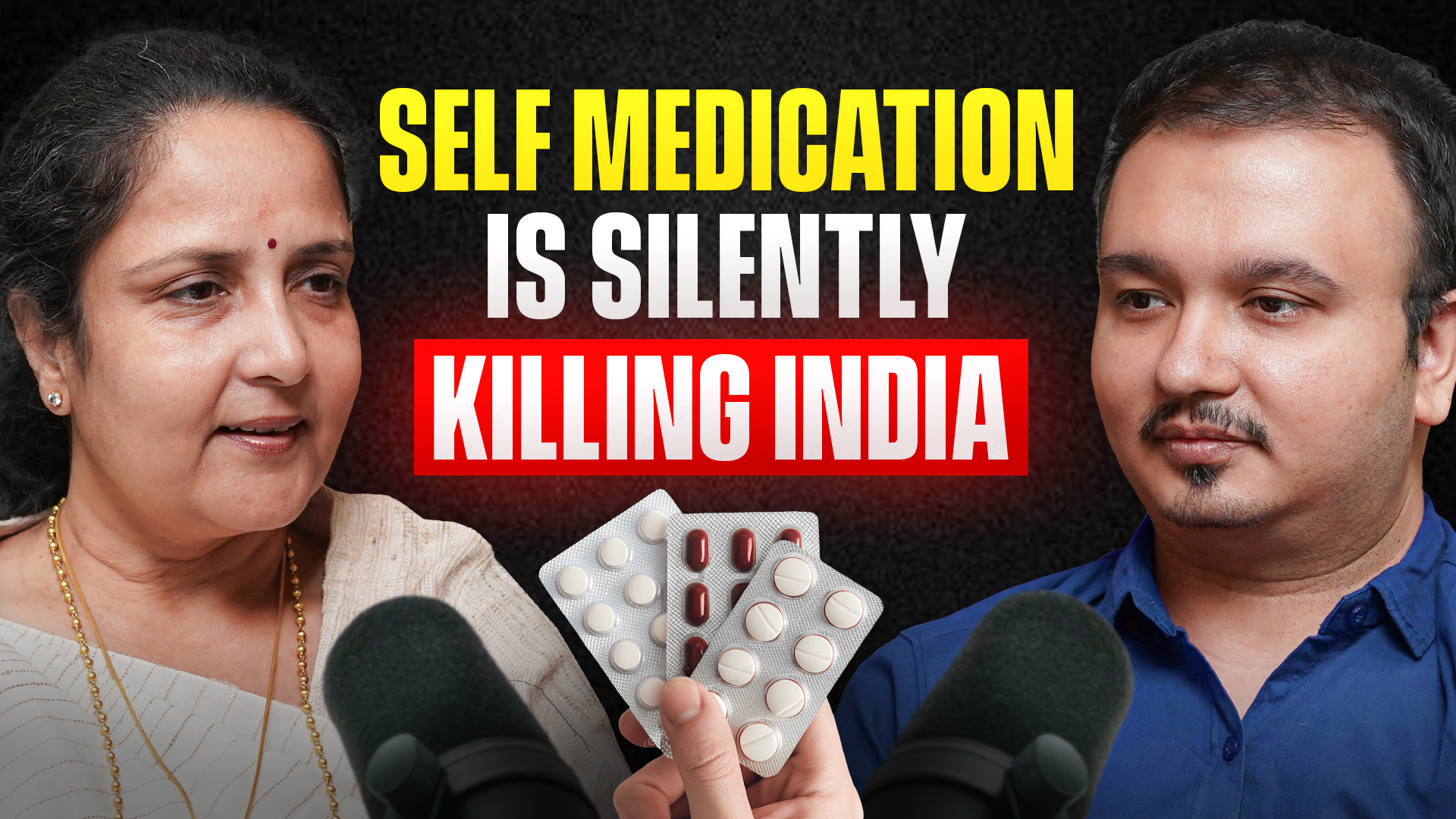
This is the reality of self medication in India today. And the consequences — as Dr. Richa Dayaramani explains in a deeply important conversation on The HJ Show — are far more serious than most people realise.
Dr. Richa Dayaramani holds a PhD in Pharmaceutical Sciences with over 25 years of experience and is an EC Member of the Gujarat State Pharmacy Council. Her message is clear, urgent and backed by data that most Indians have never heard.
The Instant Medicine Habit
We live in an age of instant everything. Groceries in ten minutes. Medicines delivered to your door. Diagnoses from a Google search or an AI chatbot.
When a fever arrives or a cold sets in the instinct is immediate — take something. Fix it fast. Get back to work.
But Dr. Richa points out what most people do not consider. Every medicine is ultimately a chemical. And introducing unnecessary chemicals into your body — especially when your immune system is already capable of handling the situation — creates problems that compound silently over time.
In most cases of mild seasonal viral infections — a slight fever, runny nose, mild cough — the body’s immune system is self-sufficient. With rest, warm water and basic care, recovery happens naturally within two to three days. The antibiotic is not only unnecessary — it is actively harmful.
Viral vs Bacterial — The Distinction That Saves Lives
One of the most critical and widely misunderstood distinctions in everyday health is the difference between viral and bacterial infections.
Viral infections — like the common cold, influenza and Covid-19 — are caused by viruses. They follow a pattern of mild to moderate fever that fluctuates throughout the day, body ache, headache and general fatigue. The body can typically manage these on its own.
Bacterial infections — like UTIs, ear infections, throat infections and tuberculosis — are caused by bacteria. They present with persistent high fever, localised pain and symptoms that do not resolve on their own.
The critical point is this. Antibiotics are antibacterial. They have no effect on viruses whatsoever. Taking an antibiotic for a viral infection does not help the virus — but it does kill the friendly bacteria naturally present in your gut, compromises your immune system and creates the conditions for antibiotic resistance to develop.
What is Antimicrobial Resistance — And Why Should You Care
Antimicrobial Resistance — AMR — is what happens when bacteria adapt to survive exposure to antibiotics. Every time a course of antibiotics is taken unnecessarily, or stopped too early, the bacteria that survive learn. They mutate. They develop genetic defences against the drug. And the next time that antibiotic is used against them — it no longer works.
The numbers are staggering. Since 1990, three lakh Indians die directly from AMR every single year. Close to ten lakh more die indirectly from complications related to resistant infections. A study published in The Lancet found that 83 percent of Indians carry antibiotic-resistant bacteria in their bodies.
These are not distant statistics. This is happening in homes, hospitals and communities across the country right now.
The Superbug — What It Is and Why We Cannot Fully Defeat It
The term superbug refers to bacteria that have acquired resistance to the drugs commonly used to treat them. They have been exposed to antibiotics so many times — through self medication, incomplete courses and even through the food chain via poultry and dairy — that they have evolved beyond the reach of standard treatment.
Dr. Richa uses a vivid analogy. Imagine a bacteria as a student preparing for an exam. Each time it encounters an antibiotic and survives, it gets smarter. It studies the chemical. It adapts. And by the time the same drug is used again — the bacteria has already prepared its defence.
This is why tuberculosis, once nearly eliminated from India, is making a serious comeback. Resistant strains of TB bacteria are now circulating that do not respond to standard first-line antibiotics. Doctors are being forced to use fourth-generation drugs — powerful, expensive and with significant side effects — for infections that should be manageable with basic treatment.
The Role of the Pharmacist
One of the most underappreciated figures in the healthcare chain is the licensed pharmacist. Under Schedule H1 guidelines issued by regulatory bodies including the Gujarat State Pharmacy Council, certain classes of antibiotics cannot legally be sold without a valid prescription. Yet in practice, over-the-counter dispensing remains widespread.
Dr. Richa emphasises that a good pharmacist is a bridge between the doctor and the patient. Before dispensing any medicine, a pharmacist should counsel the patient on dosage, timing, food interactions and what to watch for. This simple act of counselling can prevent enormous harm.
When visiting a chemist, patients should always ask about interactions with their existing medications, check expiry dates carefully and — most importantly — never buy prescription antibiotics without a valid prescription from a qualified doctor.
Food Safety, Sanitisation and the Bigger Picture
AMR does not only enter the body through medicine. Antibiotics given to poultry and dairy animals to enhance production enter the food chain. The vegetables and grains grown in chemically treated soil carry trace residues. Quick commerce food delivery — stored, packaged and transported across multiple hands — carries contamination risks that most consumers never consider.
Dr. Richa’s advice is practical. Check packaging for damage and smell before consuming. Prefer freshly cooked food. Wash hands thoroughly with soap and water — not just hand sanitiser, which itself may contribute to resistance. Maintain basic sanitation habits consistently.
Vaccination is equally critical. Vaccines are the first line of defence against infections — and every prevented infection is one fewer opportunity for bacteria to develop resistance.
What You Can Do — Right Now
The individual actions that can slow AMR are not complicated. They require awareness and discipline more than resources.
Never take antibiotics without a doctor’s diagnosis. Wait two to three days when symptoms are mild — the body often heals itself. If you do need antibiotics, complete the full course even after you feel better. Never share antibiotics with others. Never use leftover medicines from a previous illness. Always buy from a trusted, licensed pharmacist. And crucially — get yourself and your family vaccinated as per recommended schedules.
Dr. Richa closes with a message that is both honest and hopeful. Antimicrobial Resistance cannot be fully defeated — the bacteria will always evolve. But its speed can be dramatically slowed. And the power to slow it lies with every individual who makes a more informed decision the next time they reach for a tablet.
Prevention is always better than cure. And awareness is where prevention begins.

