There is a sentence that Mr. Kamlesh Mehta uses early in the conversation that reframes everything that follows: handwriting is the ECG of the brain. Just as a heart monitor captures what is happening inside the body at a given moment, handwriting captures what is happening inside the mind — the stress, the anxiety, the optimism, the hidden fears — at the exact moment the pen touches the paper.
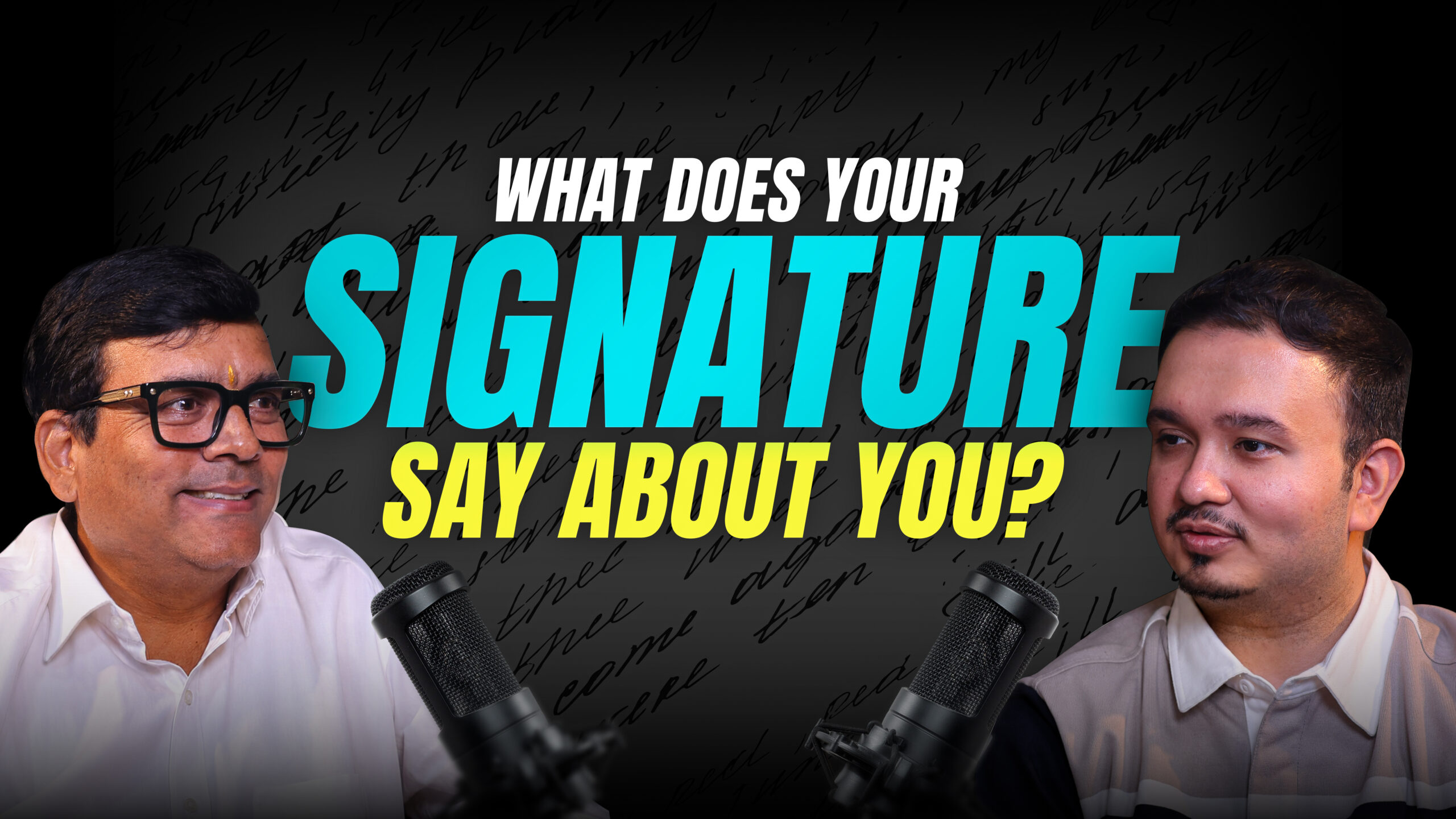
On this episode of The HJ Show, host Harsh Joshi sits down with Kamlesh Mehta, Graphologist and Handwriting Analysis Expert, for one of the most fascinating and practically useful conversations the show has hosted. What begins as a curiosity about whether handwriting can reveal personality quickly expands into something far more significant — a conversation about health, forensic science, subconscious reprogramming, and why the simple act of writing by hand every day might be one of the most important things you are currently not doing.
What Graphology Actually Is
Most people assume graphology is about reading personality — an interesting party trick or a vaguely mystical skill. Kamlesh is clear from the start: it is none of those things. Graphology is the scientific study of handwriting as an expression of the subconscious mind. It does not tell you what will happen. It tells you what is happening — right now, in this person, based on how they are writing today.
The distinction matters. Graphology is not fortune telling. It is closer to a psychological assessment — one that takes no more than a sample of writing and a trained eye to produce insights that might take hours of conversation to uncover otherwise.
Reading the Alphabet — Letter by Letter
One of the most immediately practical parts of the conversation is Kamlesh’s breakdown of specific letters and what they reveal. Letter E, for instance, is a direct indicator of listening behaviour. A person who writes their E in a very closed, tight form is a selective listener — someone who hears what they want to hear and filters out the rest. Letter T and the placement of its crossbar reveals ambition and how someone relates to goals. The dot on letter I — where it falls, how heavy it is, how consistent it is — reveals levels of impatience and attention to detail.
For parents, perhaps the most valuable insight comes from Kamlesh’s explanation of what exam pressure does to a child’s handwriting. When a child is under significant stress, the writing begins to show what is called threading — letters start to dissolve, losing their form and structure. It is the handwriting equivalent of a trembling voice. And it tells you, without the child needing to say a word, that something is genuinely wrong.
The Baseline — Optimism, Anxiety, and Everything In Between
The baseline — the invisible line on which letters sit — is one of the most revealing elements in a sample of writing. A baseline that consistently rises indicates optimism and forward energy. One that drops reveals low mood, stress, or a negative outlook that the person may not even be consciously aware of. And a baseline that fluctuates wildly? That tells you the writer is emotionally inconsistent — someone whose mood and outlook shift significantly depending on circumstances.
This is why handwriting changes with emotions. If you write when you are anxious, the sample will look different from one written when you are calm. The permanent traits — the deeper personality structures — stay consistent. But the emotional weather of the day shows up clearly.
Can Handwriting Detect Health Issues?
This is where the conversation becomes genuinely extraordinary. Kamlesh explains that specific health conditions have been linked to specific changes in handwriting — not as a diagnostic tool, but as a probabilistic signal worth investigating. Letter B carries signals related to the heart. Letters M and N relate to kidney function. Letter R, to the throat. He is careful to frame this as a weather forecast — it shows probability, not certainty. But the probability is significant enough that several institutions have studied the connection between handwriting changes and early disease markers. The most striking claim: certain handwriting patterns have been found up to four years before a cancer diagnosis, in patterns consistent enough to have attracted serious academic interest.
Forensic Graphology — Catching Lies on Paper
Graphology has long been used in forensic contexts — catching forged signatures, identifying anonymous letters, and reading deception in written statements. Kamlesh walks through a real example of signature forgery detection, explaining how even when someone consciously attempts to replicate another person’s writing, the subconscious differences in rhythm, pressure, and letter construction give them away. The forger is thinking. The original signer was not. And that difference is measurable.
Changing Your Signature — Rewiring the Subconscious
One of the most actionable ideas in the episode is about signature change. Kamlesh explains that your signature is not just how you sign documents — it is the most compressed, most automatic expression of how you see yourself. Most people’s signatures develop in their teens and early twenties and never change again, even as the person changes significantly. Working with a graphologist to intentionally redesign a signature — and then consistently using it — has been shown to create real changes in self-perception and behaviour over time. It is not symbolic. It is neurological: you are literally creating a new automatic response pattern through repetition.
Handwriting Compatibility — Better Than Kundli Matching?
Kamlesh makes a case that handwriting compatibility analysis between partners reveals far more about long-term relationship harmony than traditional compatibility assessments. Communication styles, emotional consistency, levels of patience, how each person handles conflict — all of this is visible in two handwriting samples placed side by side. Whether one accepts this fully or not, the underlying logic is sound: how you write reflects how you think, and how you think determines how you relate to others.
The Message for Parents and Adults
The episode ends with two clear recommendations. For parents: stop comparing your children to each other or to external standards. Every child’s handwriting is unique because every child’s mind is unique. Forcing conformity in writing style suppresses the very individuality that graphology is designed to read. For everyone else: write by hand every day. Not because it is nostalgic, but because it keeps the subconscious connection between hand and mind active — and that connection, Kamlesh argues, is one worth protecting in an age where almost everything is typed.
Watch the full episode of The HJ Show with Kamlesh Mehta on YouTube, or listen on Spotify and Amazon Music.

