
There are business stories that inspire. And then there are business stories that transform. The journey of Pratik Agarwal, Founder of India Fab, falls firmly in the second category.
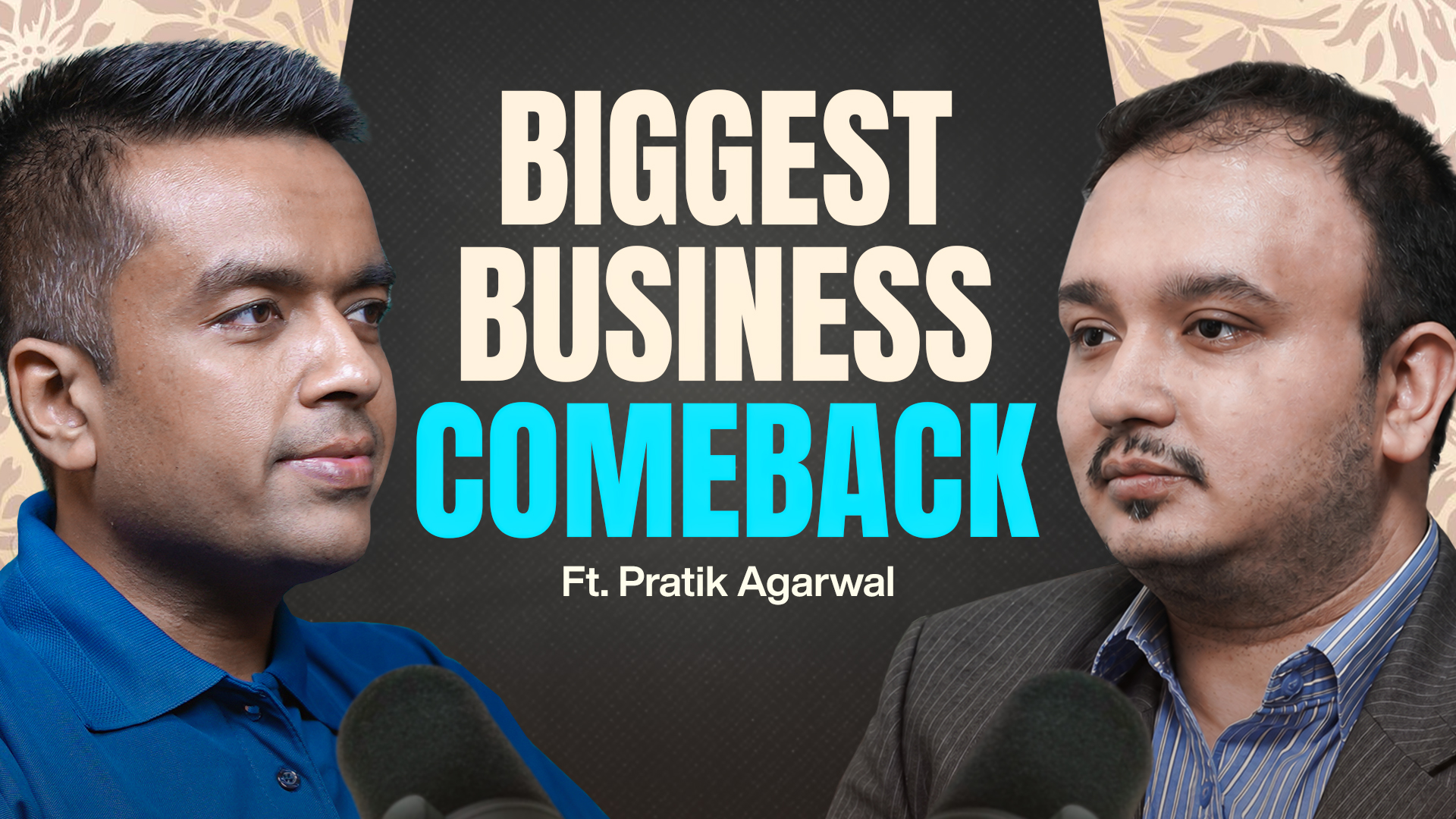
In a candid, unfiltered conversation on HJ Show, Pratik shared what most entrepreneurs never talk about — the real cost of building a business, surviving a crisis, spending 27 days in a hospital, and still finding the courage to come back.
The Beginning — Family Legacy Meets New Opportunity
Pratik comes from a family with a 35 to 40 year legacy in the textile industry, based out of Malegaon. When he stepped into the family fold during his college years, the business was going through a downward phase. Rather than walking away, he chose to understand it.
It was during this time that a chance visit to a contractor’s office changed everything. He saw someone with no prior business knowledge selling 6,000 to 7,000 sarees daily on e-commerce — with strong profit margins. The realisation was immediate. If they could do it, India Fab could do it better.
By Diwali 2015, Pratik had made his decision. India Fab would enter e-commerce.
The Golden Phase — 150 to 200% Growth Every Year
From 2017 to 2020, India Fab grew at 150 to 200 percent year on year. Every single year, sales doubled. The business was supplying sarees to sellers on Myntra, Flipkart and Amazon, operating on a white-label B2B model that gave brands everything — design, manufacturing, photoshoots and logistics.
It was a golden phase. The kind most entrepreneurs only dream of.
But growth, as Pratik learned, comes with its own traps.
The Mistake Every Growing Entrepreneur Makes
As business expanded rapidly, the systems did not grow with it. Teams were not built in time. Technology was not adopted fast enough. The work kept coming — but the infrastructure to handle it was not ready.
This is one of the most common and costly mistakes in entrepreneurship. When business is rising, the focus goes entirely on revenue. Systems, teams and processes get neglected. And then one day, the gap becomes impossible to ignore.
Pratik acknowledges this openly. It is a lesson he learned the hard way.
Covid — The Boom That Became a Crisis
When Covid hit in 2020, India Fab experienced something unexpected — a 700 percent spike in business. With offline retail shut, demand shifted entirely to e-commerce. Sarees were still needed for weddings and functions, even small ones. And India Fab was positioned perfectly to supply them.
But the boom did not last. As offline markets reopened, manufacturers who had previously supplied India Fab’s clients began approaching those clients directly — offering lower prices. Clients switched. Some started manufacturing themselves.
The result was ₹3.5 Crore worth of stock sitting unsold. Online products could not be offloaded in offline markets. The cycle stopped.
Rock Bottom — Hospital, Debt and Darkness
The pressure was enormous. Business rotation had stopped. Payments were due to suppliers. Goodwill — built over years — was at risk. And at the worst possible moment, Pratik’s health gave way.
He was hospitalised for 27 days. The nature of his illness is something he speaks about carefully, acknowledging it was stress-induced and deeply connected to the mental pressure he was carrying. During those 27 days, he was not fully conscious of everything happening around him. It was his family — especially his sister — who managed the situation.
When he finally began recovering, he learned who had truly stood by him. Real friends revealed themselves. Family showed up without question. And two friends from his network — businessmen themselves — stayed by his side through the entire ordeal.
As Pratik reflects: when you are mentally blocked and financially pressured, you cannot truly be present with anyone — not even the people you love most.
The Comeback — Paper, Patience and Discipline
Recovery took three months. Returning to business took six more. The method was simple but disciplined — every problem written on paper, every piece of stock accounted for, every potential buyer identified individually.
Slowly, the stock moved. Goodwill was protected. Not a single commitment was broken. Pratik chose to pay with interest where needed rather than damage his word.
And then something unexpected happened. The clients who had left began returning. They had tried manufacturing themselves — and discovered how difficult it was. The value of what India Fab had always provided became clear only in its absence.
By 2025, the full business cycle had come back. India Fab was supplying again. And this time, Pratik was also selling directly under his own brand on e-commerce platforms — a dual model built from the lessons of crisis.
Key Lessons for Aspiring Entrepreneurs
Through everything, Pratik draws clear lessons for anyone building a business today.
Build systems as you grow. Do not wait until you are overwhelmed. Your team, your technology and your processes must grow with your revenue — not after it collapses.
Protect your goodwill above everything. Money can be recovered. A broken word in the market is far harder to rebuild.
Network aggressively and deliberately. The people who helped Pratik through his darkest phase came from his professional network. That network became his safety net.
Start investing in your health before it demands your attention. Three months of recovery and six months of rebuilding could have been avoided with better physical and mental care.
And perhaps most importantly — patience. Every supplier who left came back. Every client who walked away returned. The business cycle is real. If you stay disciplined and consistent, it comes around.
Where India Fab Stands Today
India Fab today operates across every category of sarees — handwork, digital print, embroidery, mill print and more. Pratik sells directly on e-commerce and supplies to brands doing the same. The team has grown. The systems are stronger. And the founder is wiser.
His story is not just about textiles or e-commerce. It is about what it truly costs to build something real — and what it takes to protect it when everything falls apart.

